
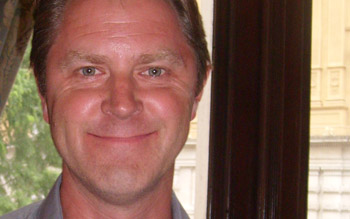
Following the Society’s Annual General Meeting on 29 June, members and guests listened to a fascinating talk by Richard Combes, Head of Policy at the Authors’ Licensing and Collecting Society (ALCS), while enjoying a delicious afternoon tea. Richard spoke about the ALCS’s work and how it collects and distributes money to some 90,000 U.K. writers every year in respect of a range of photocopying, licensing and secondary rights.
Those SWWJ members who already benefit from the efforts of the ALCS learned just how the money we are owed (more than £500 million collected so far) is tracked down, collected and distributed, while those who had not yet joined the scheme were actively encouraged to do so.
Richard told us how the ALCS was formed by a group of visionary writers (in a pub!) forty years ago and of some of the celebratory events planned for this, its anniversary year. The main aim of his talk was to try to demystify the work of the ALCS, which employs around 35 staff and is an entirely non-profit making organisation, working for the collective benefit of writers who could never hope to keep track of photocopying and all manner of secondary rights linked to their own work across the world. It funds its staff and admin costs by deducting a 9.5% commission from all distributed funds.
Non-fiction certainly generates the biggest ‘pot’ with textbooks, professional journals and magazine articles in demand by schools and universities who pay a licence fee for the privilege of being able to legally copy pages for their students, with education and business being the most widely copied and therefore most lucrative areas. But even novelists are urged to register their work, as there will be some fees collected on their behalf, for instance from non-U.K. library borrowing. So how much an individual receives will depend on the class of writing, how many works he/she has written or contributed to, and much more. An annual statement prepared for each member lists the sources of their own share of the annual distribution.
Richard stressed just how much the advancement of technology is changing the work of the ALCS, as digital formats appear, work is published online, and even producers of memory sticks and flash-drives have to pay a licensing fee. In the end, it all comes down to data and how it is collected and shared, with the ALCS now working collaboratively with other similar agencies at home and abroad, and keeping a constant eye on changing policy and practices, government interventions in the U.K. and the E.U., in order to protect the rights of its members.
Questions from the floor were dealt with thoroughly and knowledgeably, and we were left in no doubt that the ALCS is a friendly and highly approachable organisation. If you have not yet joined, please take a look at their website www.alcs.co.uk/ About a hundred new members are joining every week, so don’t miss out on what you may be owed. You never know until you apply!
Several members took the trouble to thank Richard and the ALCS for the extra money that finds its way into their bank accounts every year. As Richard did not charge a fee for his inspiring talk, he was presented with a gift bottle of wine as a token of our thanks.
Recent Comments